Sunday, 13 December 2015

Habits That Wreck Your Teeth

Chewing on Ice


Chewing ice is a seemingly harmless, unconscious habit but can cause permanent damage to our teeth with small cracks. These cracks can grow larger over time and ultimately cause a tooth to fracture. Opt for chilled water or drinks without ice to resist the urge.

Playing Sports With No Mouth Guard


Going out on the playing field without something to protect your teeth is as important as wearing a helmet and other protective body gear. Your teeth are vulnerable to being knocked out or damaged from high impact sports such as basketball, football, hockey, and soccer. A sports mouth guard helps cushion hard blows to the teeth and jaw.

Tongue Piercings


Tongue piercings are a trend that can come at a hefty price in terms of cost to your health. Highly discouraged by dentists, tongue piercings can cause teeth to chip or break requiring dental work. They can also rub against the gums and cause permanent gum recession, which can lead to sensitivity and even tooth loss. Mouth jewelry also encourages more bacteria buildup in the mouth creating an overall unhealthy situation.

Grinding Teeth


Grinding or clenching teeth is called "bruxism" and affects an estimated 30 to 40 million people in the U.S. It usually happens at night, it can be an inherited trait from a parent, and it is often associated with stress in one's life. It puts pressure on teeth, jaw muscles, and the jaw joint (temporomandibular joint or TMJ) and can cause pain. Wearing a custom-made mouth guard at night may help prevent damage and reduce pressure on teeth and surrounding structures. Other methods such as biofeedback and relaxation techniques might help.

Soda


High sugar and acid content make for a bad combination for your teeth. Frequent soda drinking will essentially "bathe" your teeth in sugar and can lead to dental decay. Additionally, increased acid exposure works to erode tooth enamel and can lead to teeth sensitivity. If you must drink soda, lessen the frequency and opt for the healthier thirst-quencher, water. Also, minimize the erosion of enamel by rinsing with water after your teeth have been exposed to acidic beverages. Try sipping acidic drinks through a straw to avoid contact with the teeth. Finally, wait at least 30 minutes before brushing with a soft toothbrush after acid exposure to avoid further breakdown and wear of your enamel.

Opening Stuff With Your Teeth


Teeth are meant for eating, speaking properly, and smiling. Anything else can be unhealthy and this most certainly includes using them as tools. Despite the convenience, opening potato chip bags, bobby pins, or even bottle caps with teeth can cause teeth to chip or fracture. Reach for the proper tools for such tasks to save your teeth from unnecessary damage.


Burns

Introduction to burns

The skin has an important role to play in the fluid and temperature regulation of the body. If enough skin area is injured, the ability to maintain that control can be lost. The skin also acts as a protective barrier against the bacteria and viruses that inhabit the world outside the body.

The anatomy of the skin is complex, and there are many structures within the layers of the skin. There are three layers:


1. Epidermis, the outer layer of the skin
2. Dermis, made up of collagen and elastic fibers and where nerves, blood vessels, sweat glands, and hair follicles reside.
3. Hypodermis or subcutaneous tissue, where larger blood vessels and nerves are located. This is the layer of tissue that is most important in temperature regulation.

The amount of damage that a burn can cause depends upon its location, its depth, and how much body surface area that it involves.


How are burns classified?

Burns are classified based upon their depth.

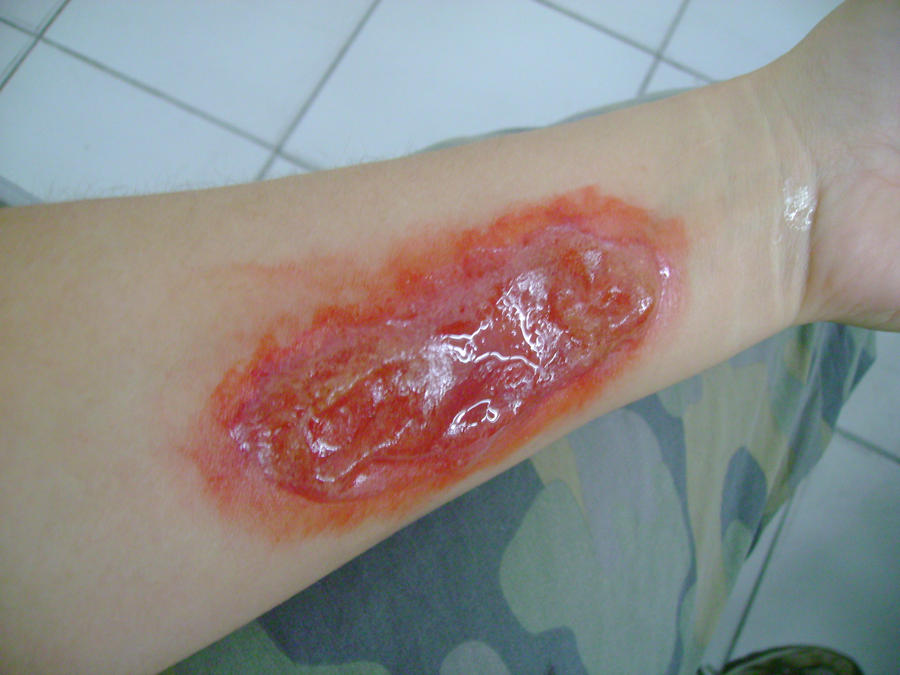
A first degree burn is superficial and causes local inflammation of the skin. Sunburns often are categorized as first degree burns. The inflammation is characterized by pain, redness, and a mild amount of swelling. The skin may be very tender to touch.


Second degree burns are deeper and in addition to the pain, redness and inflammation, there is also blistering of the skin.


Third degree burns are deeper still, involving all layers of the skin, in effect killing that area of skin. Because the nerves and blood vessels are damaged, third degree burns appear white and leathery and tend to be relatively painless.


Burns are not static and may mature. Over a few hours a first degree burn may involve deeper structures and become second degree. Think of a sunburn that blisters the next day. Similarly, second degree burns may evolve into third degree burns.

Regardless of the type of burn, inflammation and fluid accumulation in and around the wound occur. Moreover, it should be noted that the skin is the body's first defense against infection by microorganisms. A burn is also a break in the skin, and the risk of infection exists both at the site of the injury and potentially throughout the body.

Only the epidermis has the ability to regenerate itself. Burns that extend deeper may cause permanent injury and scarring and not allow the skin in that area to return to normal function

Opium and Heroin

What is Opium?

Opium is a highly addictive narcotic drug acquired in the dried latex form from the opium poppy (Papaver somniferum) seed pod. Traditionally the unripened pod is slit open and the sap seeps out and dries on the outer surface of the pod. The resulting yellow-brown latex, which is scraped off of the pod, is bitter in taste and contains varying amounts of alkaloids such as morphine, codeine, thebaine and papaverine.

What is Heroin?

Heroin (diacetylmorphine) is derived from the morphine alkaloid found in opium and is roughly 2-3 times more potent. A highly addictive drug, heroin exhibits euphoric ("rush"), anxiolytic and analgesic central nervous system properties. Heroin is classified as a Schedule I drug under the Controlled Substances Act of 1970 and as such has no acceptable medical use in the United States. Pure heroin is a white powder with a bitter taste. Most illicit heroin is sold as a white or brownish powder and is usually "cut" with other drugs or with substances such as sugar, starch, powdered milk, or quinine. It can also be cut with strychnine or other poisons. Because heroin abusers do not know the actual strength of the drug or its true contents, they are at risk of overdose or death. Another form of heroin known as "black tar" may be sticky, like roofing tar, or hard, like coal. Its color may vary from dark brown to black. Heroin street names include smack, H, skag, junk, brown sugar, horse, and black tar.

Methods of Use

Heroin is most often injected, however, it may also be vaporized ("smoked"), sniffed ("snorted"), used as a suppository, or orally ingested. Smoking and sniffing heroin do not produce a "rush" as quickly or as intensely as intravenous injection. Oral ingestion does not usually lead to a "rush", but use of heroin in suppository form may have intense euphoric effects. Heroin can be addictive by any given route.

Effects of Heroin Use

Heroin is metabolized to morphine and other metabolites which bind to opioid receptors in the brain. The short-term effects of heroin abuse appear soon after a single dose and disappear in a few hours. After an injection of heroin, the user reports feeling a surge of euphoria (the "rush") accompanied by a warm flushing of the skin, a dry mouth, and heavy extremities. Following this initial euphoria, the user experiences an alternately wakeful and drowsy state. Mental functioning becomes clouded due to the depression of the central nervous system. Other effects that heroin may have on users include respiratory depression, constricted ("pinpoint") pupils and nausea. Effects of heroin overdose may also include slow and shallow breathing, hypotension, muscle spasms, convulsions, coma, and possible death.

Intravenous heroin use is complicated by other issues such as the sharing of contaminated needles, the spread of HIV/AIDS, hepatitis, and toxic reactions to heroin impurities. Other medical complications that may arise due to heroin use include collapsed veins, abscesses, spontaneous abortion, or endocarditis, an inflammation of the heart lining and valves. Heroin addiction can remove an otherwise healthy and contributing member from society.

Treatment Options for Heroin Addiction or Overdose

Several medical treatment options exist for heroin addiction. These treatments can be effective when combined with a medication compliance program and behavioral therapy. Methadone (Dolophine®, Methadose®), buprenorphine (Subutex® , brand discontinued in U.S), buprenorphine combined with naloxone (Suboxone®) and naltrexone (Depade®, ReVia®) are approved in the US to treat opioid dependence. These treatments work by binding fully or partially to opiate receptors in the brain and work as agonists, antagonists or a combination of the two. Agonists mimic the action of the opiate, and antagonists block and reverse the action of the opiate. Oral administration of these drugs may allow for a more gradual withdrawal from opiates. A long-acting intramuscular depot formulation of naltrexone (Vivitrol®) is also available for use following opiate detoxification.

Methadone has been used for over a quarter century to treat heroin addiction. The use of methadone in opiate dependency is highly regulated in the US, and may differ between states. Oral methadone is approved for opiate detoxification and maintenance only in approved and certified treatment programs, although certain emergency or inpatient care exceptions exist. Patients usually need to visit a center daily for treatment and follow-up; however, special exceptions may be granted for Sundays, State and Federal holidays, and other times as determined by the Treatment Center Medical Director.

Buprenorphine/naloxone, like methadone, has been shown in clinical trials to be effective in treating heroin dependence, and may have a lower risk for withdrawal effects upon discontinuation. Naloxone (a pure opiate antagonist at receptor sites) is present to help prevent the intravenous abuse of the buprenorphine component. Buprenorphine/naloxone treatment takes place in an authorized physicians' office, and this may be more acceptable to patients. Buprenorphine is also available as a single agent and is used primarily for induction at treatment onset. Patients are usually switched to the combined buprenorphine/naloxone agent for outpatient maintenance therapy. A 2013 report by the Drug Abuse Warning Network (DAWN) highlights the fact that buprenorphine has become a popular drug of abuse itself. Emergency department visits involving buprenorphine increased substantially from 3,161 in 2005 to 30,135 in 2010.

Naltrexone, available orally and as an intramuscular depot injection is another treatment option, but patients must be opioid-free for at least 7 to 10 days prior to treatment. Naltrexone is a pure opioid antagonist and may result in withdrawal symptoms if the patient is not opioid-free.

Heroin overdose is a medical emergency that requires treatment with naloxone. Intravenous naloxone will result in reversal of the opioid-induced respiratory depression within 2 minutes. Retreatment with naloxone may be required as the duration of action of naloxone (30 to 120 minutes) may be shorter than the action of the opioid. Respiratory support, intravenous fluids, and other adjunctive medications may be required.

Extent of Heroin Use

Heroin addiction is a treatable condition, but its use is increasing in recent years. According to the 2011 Survey on Drug Use and Health by the US Substance Abuse and Mental Health Administration, it is estimated that 607,000 persons per year used heroin in the years 2009-2011, compared to 374,000 during 2002-2005. Similarly, the estimated number of new heroin users increased from 109,000 per year during 2002-2005 to 169,000 per year during 2009-2011.

The increase in initiation is evident among young adults aged 18 to 25 and adults aged 26 and older. There were 28,000 youth initiates per year in 2002-2005 and 27,000 in 2009-2011. Young adult initiates increased from 53,000 per year to 89,000 per year, and older adult initiates increased from 28,000 to 54,000 for these combined time periods. Past year use estimates for 2002-2005 and 2009-2011 showed the same pattern: for youths, estimates were 43,000 and 39,000; for young adults, the estimates were 124,000 and 208,000; and for older adults, the estimates were 207,000 and 361,000. Monitoring the Future (MTF) data indicates an increase for young adults aged 19 to 28 and a decrease for 10th graders in rates of past year heroin use between 2002 and 2011. MTF data did not indicate any changes among 8th and 12th graders between these 2 years.

Patients with heroin addiction should seek advice from health care providers who can guide them with the most appropriate and safe treatment. Combined behavioral and medical therapies may allow the patient to integrate back into mainstream society and lead a positive and productive life.

Space Facts

Space Object Differences

When learning about space it can sometimes be difficult to know the difference between all of the amazing objects out there. The following terms are often confused with each other so let’s answer the question: What’s the difference between a comet, asteroid, meteoroid, meteor & meteorite?

Although there can sometimes be a blurry line between categories the following definitions should help you understand the difference between comets and asteroids, why Halley’s Comet is not a meteorite and more.


Comet

A comet is a relatively small solar system body that orbits the Sun. When close enough to the Sun they display a visible coma (a fuzzy outline or atmosphere due to solar radiation) and sometimes a tail.


Asteroid

Asteroids are small solar system bodies that orbit the Sun. Made of rock and metal, they can also contain organic compounds. Asteroids are similar to comets but do not have a visible coma (fuzzy outline and tail) like comets do.

Meteoroid

A meteoroid is a small rock or particle of debris in our solar system. They range in size from dust to around 10 metres in diameter (larger objects are usually referred to as asteroids).
Meteor

A meteoroid that burns up as it passes through the Earth’s atmosphere is known as a meteor. If you’ve ever looked up at the sky at night and seen a streak of light or ‘shooting star’ what you are actually seeing is a meteor.

Meteorite

A meteoroid that survives falling through the Earth’s atmosphere and colliding with the Earth’s surface is known as a meteorite.

Let's Learn English: If I Were or If I Was

If I WERE/ If I WAS ? ?
At school or in grammar books you are normally taught the following rule:

I / he / she / it - WAS
We / you / they - WERE
This is correct when we are talking about the PAST TENSE.


BUT there is another situation in which WERE appears that is not the past tense. It also appears in the SUBJUNCTIVE mood.

First, let's look at the following structure and meaning before explaining why it happens...


If I were you

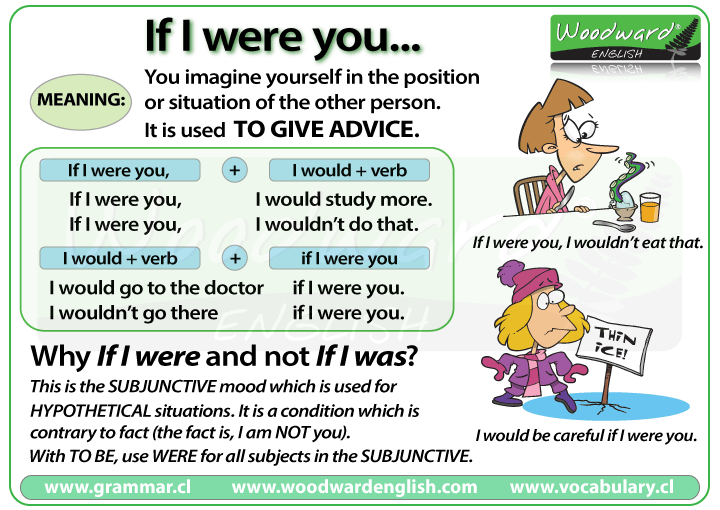
If I were you ... is used when giving ADVICE about what you would do in the same situation as the other person. You imagine yourself in their position or situation and what you would do or how you would react.


If I were you, I would study more.
If I were you, I would stop doing that.
If I were you, I would go to the doctor.
if I were you, I would subscribe to the Woodward English YouTube channel right now. :)
If I were you, I wouldn't play with those wires.

Though in informal (and grammatically incorrect) English, you may hear some people say If I was... This usage doesn't sound good, so avoid it.


You can also change the order of the sentence


I would study more if I were you.
I would be more careful if I were you.
I wouldn't do that if I were you.

Notice how the comma is not necessary with this word order.


Why do you use IF I WERE and not IF I WAS?

The reason we use WERE instead of WAS is because the sentence is in the SUBJUNCTIVE mood which is used for hypothetical situations. This is a condition which is contrary to fact or reality (the fact is, I am NOT you).

In the subjunctive mood we use IF + I / HE / SHE / IT + WERE for the verb To Be.


If I were not in debt, I would quit my job. (But the contrary is true, I AM in debt, so I cannot quit my job)
If he were taller, he'd be accepted into the team.
She would be still be correcting my grammar if she were still alive.

In informal English, you will hear some people say If I was... If he was... etc. Again, this usage doesn't sound good though unfortunately it is common, especially on the internet (and social media sites).

Can IF I WAS ever be correct?
Yes, though the sentence is not in the Subjunctive mood but the Indicative instead. Note that it is not common to use the indicative mood with IF. Let's compare:


If I was sick, she would give me medicine that tasted terrible. (indicative = states facts or asks questions - in this case, IF can be replaced by WHENEVER)
If I were sick, I wouldn't be here. (subjunctive = hypothetical - I am not sick, but I'm imagining that hypothetical situation)

If I was your boyfriend... NOOO JB!

There is a song on the radio that goes... "If I was your boyfriend, I'd never let you go..."

Well, sorry Justin Bieber fans but this is grammatically incorrect.

It should be "If I WERE your boyfriend, I'd never let you go."

Why? Because we are talking about a hypothetical situation of me being your boyfriend. It is not real, it is just a situation I am imagining so we need to use the Subjunctive Mood here.

This song is why English teachers don't like JB - well, one of the reasons. :)

Web 2.0

10 Dis

 Minggu ke-13 merupakan minggu yang telah dijanjikan oleh lecturer aq untuk membentangkan tugasan secara berkumpulan. Tugasan yang diberi kedengaran agak simple, iaitu produk inovasi. Tak kira lah produk inovasi itu melibatkan barangan atau perkhidmatan yang penting menggunakan web 2.0 iaitu medium Prezi atau Powtoon. Aq mula2 dok pikiaq la apa dia prezi ngan powtoon ni... tak pernah dengaq pon.. jadi konklusi yang ak leh buat kalau ak x tau maka hangpa semua pon x tau hahaha.. joke2..

entry kali ni ak nak cita la serba sedikit pasai web 2.0 terutama sekali prezi dan powtoon

Prezi


Prezi adalah alat persembahan yang boleh digunakan sebagai alternatif kepada tradisional program membuat slaid seperti PowerPoint. Daripada slaid, Prezi menggunakan satu kanvas besar yang membolehkan anda untuk pan dan zum ke pelbagai bahagian kanvas dan memberi penekanan kepada idea-idea yang dibentangkan di sana.


Prezi telah ditubuhkan secara rasminya pada tahun 2009 oleh pengasas Adam Somlai -Fischer , Peter Halacsy dan Peter Arvai .

Prezi digunakan dalam TED Talk

Prezi ni pada pendapat ak, nak guna dia senang lagi dari MS Powerpoint sebab kau dh tak payah nak pening2 pikir pasal nak wat transition animation bagai sebab dlm Prezi semua bende2 tu tak ade hahaha.. Prezi hanya ada pan and zoom je. lagi satu Prezi ni mesra it la sikit kalau kau baru nak jinak2 dalam bab2 it ni..

Alright.. moving on Powtoon pulak kite...

Powtoon


PowToon adalah baru alat persembahan "Do -It -Yourself " animasi jenama yang mencantikkan persembahan dan video.. dah nama pon ada toon2 mesti la banyak watak2 katun yg boleh kita pilih hehe.. berdasarkan pengamatan aku,, ni lah antara kebaikan menggunakan Powtoon:

-Mesra pengguna,  intuitif
-Stail persembahan yang tidak terkira banyaknya
-Penggabungan imej , dan kesan khas yang menarik


ni adalah contoh camne nak wat presentation atau video dengan menggunakan Powtoon..


Sekian, Wassalam...

Saturday, 12 December 2015

Microsoft Access


This is Microsoft Access 

         Minggu yang ke-11 , aq belajar Microsoft Access. Hasil penbelajaran aq, aq dapat mengetahui Microsoft Access ini. Microsoft Access adalah salah satu aplikasi yang digunakan untuk membuat, dan mengelola basis data atau lebih dikenal dengan database. Apa yang aq tahu database adalah data berbentuk jadual yang saling berkaitan (relationship) untuk menghasilkan informasi antara satu sama lain. Data digunakan sebagai masukan yang akan diolah menjadi informasi yang kita kehendaki.


Nie rupe klaw dah siap


Relationship antara tables

         Fungsi Microsoft Access yang telah aq pelajari adalah membuat program aplikasi persediaan barang serta membuat program aplikasi gaji pegawai selain daripada bertujuan membuat database (basic data) dan membuat program aplikasi kehadiran.


          Jadi itu lah serba sedikit mengenai Microsoft Access yang mungkin aq dapat daripada pembelajaran. Sekian,

[allice]